Thursday, April 28, 2016

The Top Benefits of Exercise Balls

Looking to spice up your workout? The exercise ball is a great place to start. They are in practically every gym and are a great, inexpensive piece of equipment to have at home as well.

In 1963 the exercise ball was created by Italian plastics manufacturer Aquilino Cosani. Initially, they were called Pezzi balls and used in treatment programs for newborns and infants.1

 
Reap the top health benefits of using an exercise ball

Exercise balls have seen their popularity increase over the years and are currently used in a variety of ways, ranging from physical therapy in a clinical setting to athletic training. There may be confusion as to what an exercise ball is, but it has a variety of names:
  • Yoga ball
  • Stability ball
  • Balance ball
  • Physio ball
  • Swedish ball

Benefits of Using an Exercise Ball

Exercise balls have gained popularity among fitness activists for a variety of reasons:  

More muscles used. When exercising on a resistance ball as opposed to a flat surface, more muscles are used to keep the body balanced. As a result, these muscles become stronger over time.

Decrease back pain. A study in the Journal of Strength and Conditioning Research concluded that the use of a stability ball could improve posture and might benefit individuals who spend a lot of time sitting or who are prone to back pain.2  

Strengthen the core. The muscles in the core are used for most daily activities such as reaching and lifting. A strong core is essential for athletes and can help improve sports performance as well as help protect against injury in everyday living.

Top Stability Ball Exercises

An exercise ball can be used in a variety of ways. Here is a full body stability ball workout routine that can be performed with or without weight:

Exercise Ball Chest Exercises


Stability Ball Pushups


Stability ball pushups with hands on the ball and feet on the floor


  • Can be done with hands on the ball or with feet on the ball and hands on the floor
  • Push yourself up by extending your arms and slowly lower
  • Inhale when lowering body and exhale when pushing body up
  • Perform 2 sets of 10-20 reps 

Stability ball pushups with feet on the ball and hands on the floor


Stability Ball Back Exercises 

Stability Ball Back Extension

  • Lie on stability ball with your hands behind your head.
  • Squeeze your glutes and lift your torso up until your body forms a straight line.
  • Repeat.
  • Perform 2 sets 10-15 reps
Build strength & stability in the lower back and glutes with stability ball back extension


Stability Ball Reverse Hyperextension
  • Lie on the exercise ball legs down and extended
  • Keeping legs extended, slowly raise legs
  • Pause briefly
  • Lower slowly
  • Inhale while lowering legs, exhale when raising
  • Perform 2 sets 10-15 reps

Reverse hyperextension with stability ball with proper form and technique


Exercise Ball Shoulder Exercises

Note: these exercises can be done with or without light weights.  

Rear Deltoid Raise
  • Lie on exercise ball with back and legs extended
  • Keeping arms bent, raise upper arms until parallel to the floor
  • Pause
  • Slowly Lower
  • Repeat
  • Exhale when bringing arms up and exhale when lower
  • Perform 2 sets 10-15 reps
Real deltoid raise exercise with or without weights


 Side Deltoid Raise
  • Lie on your left side on the exercise ball
  • Place left arm on ball for stability with legs extended
  • With right arm extended, slowly raise until arm is pointed towards ceiling
  • Repeat
  • Exhale as arm is extended, inhale when lowering
  • Perform 2 sets 10-15 reps
Side deltoid raise workout with or without weights


Stability Ball Core Exercises 

Stability Ball V-Pass

Stability ball V-pass core exercises


  • Lie face up on the floor, arms extended, holding stability ball with both hands
  • With legs extended, lift arms and legs off the ground at the same time and place ball between your feet
  • Squeeze the ball with your legs and lower arms and legs simultaneously
  • Raise arms and legs simultaneously and grab ball with hands and lower
  • Repeat
  • Perform 15-30 reps
Stability Ball Knee Tuck

Stability ball knee tuck workout

  • Start in pushup position with legs resting on stability ball
  • Tighten abs and bring knees close to chest
  • Hold for 2 seconds
  • Extend legs
  • Repeat
  • Exhale as you bring legs close, inhale as legs are extended
  • Perform 10-20 reps

Stability Ball Leg Exercises

Wall Squats with my Stability Ball


Wall squats with the stability ball


  • Place the ball between the wall and your lower back, feet out slightly
  • Slowly lower your body toward the floor in a squat position as you continuously push back into the ball
  • Repeat
  • Inhale as lower, exhale as you rise to standing position
  • Perform 2 sets 10-15 reps
Exercise ball wall squats for legs


Lying Hamstring Curl

Lying hamstring curl on exercise ball


  • Lay flat on your back with exercise ball under your feet
  • Dig heels into the ball and extend arms into floor for support
  • Roll ball towards body slowly, keeping hips as still as possible
  • Slowly extend legs to straight position
  • Repeat
  • Inhale as legs are pulled in, exhale as legs are straightened
  • Perform 2 sets 10-15 reps
The stability ball is a great way to add variety to a workout and can be done at a gym or in the comfort of home.


Wednesday, April 20, 2016

Tactics for Alleviating the Boredom Associated with Your Workout

One of the biggest obstacles to getting a workout in can be lack of motivation. Working out may not always be the most entertaining activity, and you can probably come up with a lot of things that you would rather be doing. Take a look at these ideas to help you keep your workouts interesting.

Don't repeatedly do the same workout. Repetition day-after-day not only feels boring, but also keeps you from using new muscles. The muscles that you are using will get used to what they are doing, leaving you with no improvements. It is important to realize that novel exercise is best for strengthening the whole body. Change resistance, speed or number of reps.

Ideas to escape a boring exercise routine

 Another aspect of your workout that is easy to mix up is the scenery. Now that spring is here, you have an opportunity to get outside. Why use a treadmill when you can take in the scenery outdoors? Beyond just that, being outside gives you an opportunity to kill two birds with one stone. Being outside is a chance to bring the dog out or even run some errands, if possible.

Try bringing a friend along with you. A workout can be a great social opportunity, and conversation is a great distraction. Your workout partner may even help push you to work harder. Making plans to meet with a friend will also keep you committed to showing up. There's no backing out when you know a friend is waiting.

An important part of pushing past your workout boredom involves setting goals. You will probably need to change up your workouts to achieve those goals, and integrating cardio with strength training will propel you further. Start with small milestones and work upward. By setting goals, you are competing with yourself to do your best. Take in your victories and note your progress. Over time, you will see that you have made a huge transformation.

An obvious suggestion that often goes overlooked is to play some music. Mix up your playlist and push yourself to match the tempo. There are websites with playlists designed to match a specific tempo or heart rate. Maybe even turn your workout into a game. There are tons of apps designed specifically for this purpose that focus on running, lifting or other types of exercises.


Beat workout boredom with our gym grade fitness equipments


Overall, there's a lot that can be done to help combat boredom during a workout. That said, your biggest obstacle and your fiercest competitor will be yourself. Keep the benefits of your workout in mind, and you will be pushed above and beyond.


Thursday, April 14, 2016

The Top Health Benefits of Skipping Rope

Pressed For Time? Try Skipping Rope

For many people, getting (and staying) in shape is harder than ever. Thanks to busy schedules and hectic lifestyles, many people don't have the time (or energy) to take care of their bodies as they should. When diets high in sugar and processed foods are added to the equation it's a recipe for disaster.

Living a healthy lifestyle may be difficult, but it's not impossible: skipping rope may be just what a person needs.

Top health benefits of jump rope workouts

The Benefits of Skipping Rope


Skipping rope is popular with kids, but it is especially beneficial for adults:

Burns calories fast. Minute for minute, skipping rope ranks near the top of the list for exercises that burn calories, making it an effective way to lose weight. It is estimated that a 200 pound person can burn up to 1000 calories in an hour, which is equivalent to 166 calories in 10 minutes, or running eight minute miles. 1

Convenience. Skipping rope can be done anywhere: at the office, in a hotel room, at home, etc. This allows even the busiest of people to get a quick workout wherever they are.

Full body workout. Skipping rope works the entire body: not only do the thighs, calves and hamstrings get a great workout, but the chest, shoulders, back and core reap benefits as well.

Increased coordination and concentration. Skipping rope takes timing and concentration, and both of these skills can be applied to other aspects of a person's life.

Increased bone density. A study in the American Journal of Health Promotion studied the effects of skipping rope on sixty premenopausal women ages 25 to 50 for four months against those who were sedentary. At the end of the study, bone mineral density increased for the rope skippers by an average of .5%, while women who did not jump lost an average of 1.3% bone density.2

Skipping Rope Routines

A person can skip rope exclusively, or it can be done as part of a workout. Here are two sample jump rope workouts:

Workout #1

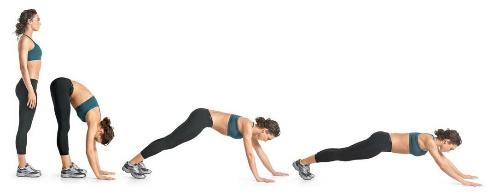
  1. Jump rope 90 seconds Inchworms 1 minute

    Inchworms for 1 minute

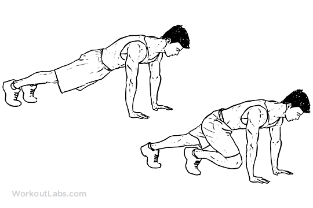
  2. Jump rope 90 seconds Mountain Climbers 20 seconds

    Mountain Climbers 20 seconds

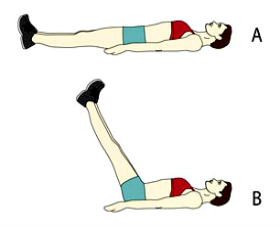
  3. Jump rope 90 seconds Leg Raises (30 seconds)

    Leg Raises for 30 seconds

  4. Jump rope 90 seconds Walking lunges 10 (curls optional)

    Walking lunges 10 (curls optional)

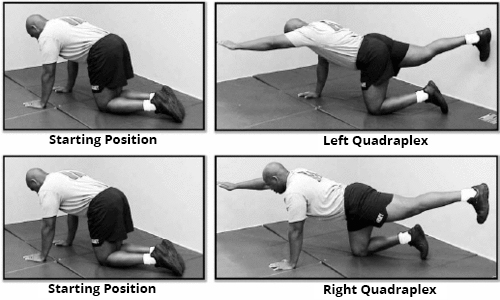
  5. Jump rope 90 seconds Quadraplex (45 seconds each side)

    Quadraplex (45 seconds each side)

Rest 2-5 minutes. Repeat

Workout #2


Stand in front of a clock or timer

  • Jump Rope for 3 minutes to warm up
  • Rest for 30 seconds
  • Jump rope as quickly as possible for 60 seconds
  • Rest for 30 seconds
  • Jump Rope as quickly as possible for 60 seconds
  • Rest for 30 seconds

Repeat this alternating pattern for 15-20 minutes

Skipping rope is a great exercise for all fitness levels and can be done practically anywhere. If a person is pressed for time or is simply looking to spice up their current fitness routine, skipping rope may be the answer.

Wednesday, April 6, 2016

Exercise Ball: Make the Smart Choice to Stay Fit at Work!

You may have heard of people replacing their classic desk chair with an exercise ball, but doesn’t it seem a bit odd to replace a sleek, leather-covered, padded, rolling chair with a big ball full of air? What, exactly, is all the hype about?

There is much more to an exercise ball than first meets the eye. While sitting on an exercise ball, the body is constantly making small adjustments to remain balanced. Though these adjustments are usually unrecognizable, they are repeatedly working various muscle groups in the core and back. Using these muscles strengthens the core muscles and increases balance through improved posture.

Exercise ball to stay fit and energetic in the office


A classic office chair is often considered a major source of back and neck pain. Most office equipment is built in a way that promotes poor posture, rather than good posture. This improper sitting can decrease productivity by reducing oxygen intake, and, in turn, energy. Slouching, or poor posture, has various short-term and long-term effects, so it should be ended sooner rather than later. Luckily, the option of using an exercise ball in place of a traditional office chair is now becoming commonplace.

Short-term, improved posture will help you to walk a little taller and sit comfortably for longer time periods, but those are not the only benefits. Improvements to your posture will take tension away from your entire body. Blood flow and breathing are quickly improved. Improvements in posture have also been shown to improve brain function and memory, along with mood increases and stress reduction. Beyond just that, improving your posture can eradicate back pain or put a stop to it before it even happens.

Sneak some exercise into the work-day. You can easily toss in some hip exercises by rolling backward or forward. You can also work your quads simply by sustaining a slow bounce. Beyond that, there are various exercises that you should probably hold off on until your lunch break, and these exercises will leave you feeling fresh for the second half of your day.

When beginning with an exercise ball in the office, you may want to use the ball for short periods of time until you become used to sitting on the ball. You will be surprised at how quickly your muscles grow tired at first, but your core and back muscles will soon adapt and strengthen with increased endurance. While on the ball, your thighs should maintain a position parallel to the floor, with upper arms remaining parallel to the spine. Keep in mind that your face should be pointed toward the middle of your computer screen rather than looking up or down to the screen.

Using an exercise ball in place of a desk chair has very clear benefits that will help you not only now, but years into the future. Your health, energy and posture can quickly be improved by making this small transition. It is time to make the smart choice to roll your desk chair out of the door and roll an exercise ball in.


Wednesday, March 30, 2016

Why Resistance Bands Are Better Than Free Weights

Buying workout equipment is always a big decision. What equipment should I buy? What weight should I go for? How much am I willing to spend? Luckily, there is an easy solution to all these problems. Instead of throwing money at free weights or even machines, just one resistance band can offer you a multitude of workouts that will push you above and beyond the scope of a free weight exercise.

Reasons to try resistance band training over free-weights

Cost

Beginning with the most obvious benefit, resistance bands are extremely cost-effective. Unlike free weights, which you need to purchase multiple sets of, resistance bands can be adjusted by changing the amount of slack on the band. You don't need to buy multiple sets of heavy weights.

Whole-body workouts

Some people may not realize that resistance bands can be used for so much more than just arms or legs. A resistance band can be used on every major muscle group, and it works at any fitness level. Resistance bands also introduce variety into workouts by engaging these many muscle groups with multiple exercises.

Not dependent on gravity

It is important to realize that resistance bands work independent of gravity. In contrast to free weights, resistance bands work horizontally and diagonally, not just vertically. This aspect helps to target specific muscles and protect joints from damage.

Lightweight

Resistance bands are very light compared to heavy free weights. The lightweight and small size makes resistance bands very easy to travel with or store away. It also makes the bands safer than free weights, which may be dropped dangerously.

Linear varying resistance


Increase your range of exercise with DynaPro resistance band

The resistance of the bands varies linearly. In other words, as one increases the range of the exercise, the elastic resistance increases. Free weights are always at the same weight, while resistance bands change resistance during exercise. As the muscles begin to adapt, a person can begin to push himself or herself to higher and higher resistances.

Avoid gym equipment

One can do so much more with one resistance band than could be imagined. The resistance band takes the role of many machines and can be added to body-weight exercises to increase benefits. Why fill a room with a multitude of free weights and a clutter of machines when one resistance band is an option?
 
Resistance bands are a clear answer to your workout equipment stresses. Light and low-cost resistance bands allow you to avoid the clutter of other equipment that simply is not as efficient as a resistance band. Resistance bands are perfect for whole-body workouts, and they can help you increase strength to your full potential. As an added bonus, a resistance band doesn't leave your hands smelling metallic and dirty the way that free weights do.


Wednesday, March 23, 2016

3 Ways an Exercise Ball Will Change the Way You Workout for Good

The exercise ball has gained much attention as a useful workout tool for core strengthening and working your lower and upper body. An exercise ball is a great way to transform your body even after an injury to reduce muscles and spinal strain during certain movements.

Exercise ball workout

Exercises for beginners

Exercise ball workouts can be especially tricky since it creates an unstable surface, which forces you to use different muscles to maintain your balance. After becoming comfortable with the ball and workout movements it will help strengthen your core, upper body and lower body; and help you break through the monotonous workout regime and have some fun while you sweat it out in the gym or at home.

There are wide variety of names by which these balls are known for such as a Swiss ball, Yoga balls, Pilates ball, Stability ball, Balance ball, Physio ball just to name a few. Since it has become widely popular, you can easily find them in most sporting good stores.

1. An Exercise ball will make your normal workout regimen more challenging!

Exercise ball abs workout
Exercise balls are an excellent way to make your normal floor or standing exercises more challenging. It will also make your muscles work harder and become more fatigued. When working your core, these balls involve working your primary muscles such as the rectus abdominis the long sheets of muscles that lie just under the skin which are responsible for the six-pack look. They also target the transversus abdominis, an abdominal muscle essential to maintaining good posture.

Exercise ball workouts target your core and can improve your sense of balance and agility, which can play key role in enhancing your performance in activities such as running, tennis, dancing and yoga.

2. Lower body workouts

You can add an interesting twist on many traditional lower-body strength-training moves with the help of exercise balls. While you are doing squats, you can place yoga ball between your lower back and the wall and then squat as you would normally. You can also place top of your back foot on a stability ball during lunges. This will put great demand on your core, hamstrings, quadriceps and glutes.

3. Upper body workouts

You can use exercise ball workouts to get every muscles group in your upper body working extra hard. It can help you to turn your traditional push-ups into more challenging move like the stability push up which will take this bodyweight move to the next level.
The best way you can do this is by placing your hands in a push-up position or on your forearms in plank pose while placing the tops of your feet on the top of the ball. This will create more of an incline, which will force your muscles to work a bit harder to keep you stable.

Monday, March 21, 2016

Exercise Ball Workouts During Pregnancy

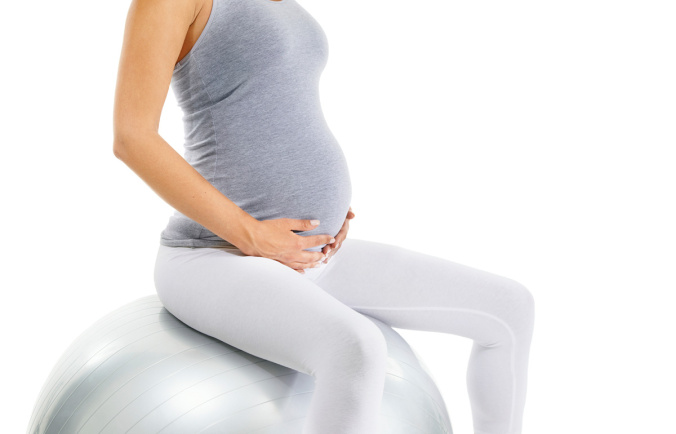
Birthing balls are great for exercise, or to get into a comfortable position during pregnancy, labor or after your baby is born.

Workout with exercise balls during and after pregnancy

Why are birthing balls/exercise balls important?

No pregnant mother will argue the fact that it is hard to sit when you are pregnant no matter how comfortable that couch is, sitting on your exercise ball will help keep your posture in check. Whenever you sit – sit on your exercise ball.

During pregnancy it is very important to have strong back muscles as well as abdominal. Using an exercise ball helps maintain stability as the belly grows – and helps keep abdominal muscles strong. Strong abdominal are important during the pushing phase of labor. After the fourth month of pregnancy, many women give up on doing ab work on the floor because it can put pressure on the vena cava, a large vein that carries blood back to the heart. The weight of the pressure from the uterus can also cause a drop in blood pressure and reduced blood flow to the brain and placenta resulting in dizziness and nausea. While balancing on the ball you can still work your abs without the discomfort of using the floor as your tool.

Many believe that the recovery phase after pregnancy is much easier when you stay fit during your pregnancy. One of the easiest ways to use an exercise ball is to sit comfortably while you are working or relaxing. Using a exercise ball is a great way to improve your posture and balance, and to exercise your ab muscles. This helps your body support the weight of your pregnancy. You may find that your ball is easier to get on and off of as opposed to a hard chair or sofa. Also, sitting on a birthing ball will give you a mini-workout. As you rock or bounce on it gently, your tummy and back will be working hard to keep you upright. Setting up your ball is a very important step, while you are inflating your ball it should be firm to the touch, but not too hard – usually about 70% of the size is the proper amount of inflation. You want to make sure the ball is inflated enough that your hips are higher than your knees.

It is recommended to leave the ball for 24 hours after inflating before you begin to use it. The firmer the ball, the less stability it has, the harder the exercises will be for you. As you try to sit on your ball for the very first time, please take precaution and rest the ball against a sturdy chair or sofa, in case you need to steady yourself. Place your feet 20-25 inches apart feet firmly planted on the floor. Keep your spine straight, but lean forward slightly. This will help to strengthen your pelvic floor muscles, which is something that is very important in pregnancy to prepare your body for an easier labor.

Remember if you feel any discomfort or become out of breath, please stop immediately.

After you become comfortable with using your ball you can then begin these exercises.

Hip Swings

Sitting upright on your ball you can begin to rock your hips gently from side to side. Rotate your hips in circles also doing sets of 10 clockwise and counterclockwise.

Arm and Leg Lift

Sit erect on top of the ball with your hands on your thighs, feet flat on the floor about hip-width apart and a comfortable distance from the ball. Maintaining your balance, straighten your left leg and lift it up to hip level. At the same time, lift your arms out to the sides up to shoulder height. Return to starting position and perform with your right leg; do reps alternating legs. (Note: If extending your leg is difficult, keep your knee bent and just lift your foot off the floor).

Wall Squat and Back Massage

Place the ball between your lower back and the wall. Lean back against the ball, and walk your feet out so they’re in front of your belly, hip-width apart. Place your hands on your thighs. Slowly bend your knees into a squat position, keeping your knees aligned with your ankles and squatting no lower than your hips. Pressing gently against the ball, feel it roll up your back. Straighten knees and hips back to a standing position. Repeat.

Use your gym ball for your baby

You can use the gym ball to cradle your baby, rocking them to sleep gently. Also babies with head control may enjoy being held and bounced. Older babies that can sit or stand with support may enjoy batting and playing with the gym ball on the floor.